Top SushiSwap APIs - A Comprehensive Guide to DEX Exchanges
The APIs and tools that give you SushiSwap trades, pools, prices and portfolio data, and the one detail most guides miss: SushiSwap pools are indexed under Uniswap protocol names, so you filter by factory to isolate them.

SushiSwap is a multi-chain decentralized exchange for token swaps, liquidity provision and yield farming. It started as a fork of Uniswap v2, added the SUSHI token for governance and liquidity rewards, and now runs v2-style and v3-style pools on Ethereum and many other chains. Reliable data on those pools and their trades is what traders, investors and developers building on it need, and this guide covers the APIs and tools that provide it.
Why Data Matters
Before the list, why data is critical within the SushiSwap ecosystem:
-
Real-Time Data: Bitquery's DEX trade and pool cubes give up-to-the-minute SushiSwap trading pair data, liquidity and transaction detail for data-driven decisions.
-
Price Precision: SushiSwap prices matter in the DEX landscape, and Bitquery provides real-time price updates for accurate trade execution and risk management.
-
Liquidity Monitoring: Liquidity is vital for DEX trading. Pool reserves, liquidity changes and newly created pairs are all available in real time, so you can manage assets and react to liquidity moves.
-
Historical Insights: Historical data and DEX screeners help optimise trading strategies by showing past market dynamics and trends.
-
Smart Contract Monitoring: Developers and security teams can watch SushiSwap's contracts for anomalies in real time through event and call streams.
Now to the list.
List of SushiSwap Data Sources (APIs and Tools)
1. Bitquery SushiSwap API
Bitquery indexes SushiSwap trades, pools, liquidity and transactions across the chains it runs on, with real-time subscriptions and the full history, and offers a free trial. There is one thing to know before writing a query.
SushiSwap pools are labelled by interface, not by brand. SushiSwap's v2 pools implement the Uniswap v2 pool interface and its v3 pools the Uniswap v3 one, so the API classifies them as uniswap_v2 and uniswap_v3 under the Uniswap protocol family. What identifies them as SushiSwap is the factory that deployed them, Trade.Dex.OwnerAddress on the chain-level cubes and Pair.Market.Address on the Trading cube. On Ethereum the SushiSwap v2 factory is 0xc0aee478e3658e2610c5f7a4a2e1777ce9e4f2ac and the v3 factory 0xbaceb8ec6b9355dfc0269c18bac9d6e2bdc29c4f. This query returns the latest SushiSwap trades on Ethereum across both, and it was run against the live API before publishing:
query LatestSushiSwapTrades {
  EVM(network: eth) {
    DEXTradeByTokens(
      orderBy: { descending: Block_Time }
      limit: { count: 50 }
      where: {
        Trade: {
          Dex: {
            OwnerAddress: {
              in: [
                "0xc0aee478e3658e2610c5f7a4a2e1777ce9e4f2ac"
                "0xbaceb8ec6b9355dfc0269c18bac9d6e2bdc29c4f"
              ]
            }
          }
        }
      }
    ) {
      Block {
        Time
      }
      Transaction {
        Hash
      }
      Trade {
        Dex {
          ProtocolName
          OwnerAddress
          SmartContract
        }
        Currency {
          Symbol
        }
        Amount
        AmountInUSD
        PriceInUSD
        Side {
          Type
          Currency {
            Symbol
          }
          AmountInUSD
        }
      }
    }
  }
}
Dex.SmartContract is the pool. The same factory filter works on the Crypto Trades API for a live feed with USD prices and market cap on every row, and on DEXPoolEvents for reserves; the Ethereum liquidity API shows the pool queries. Other ways in:
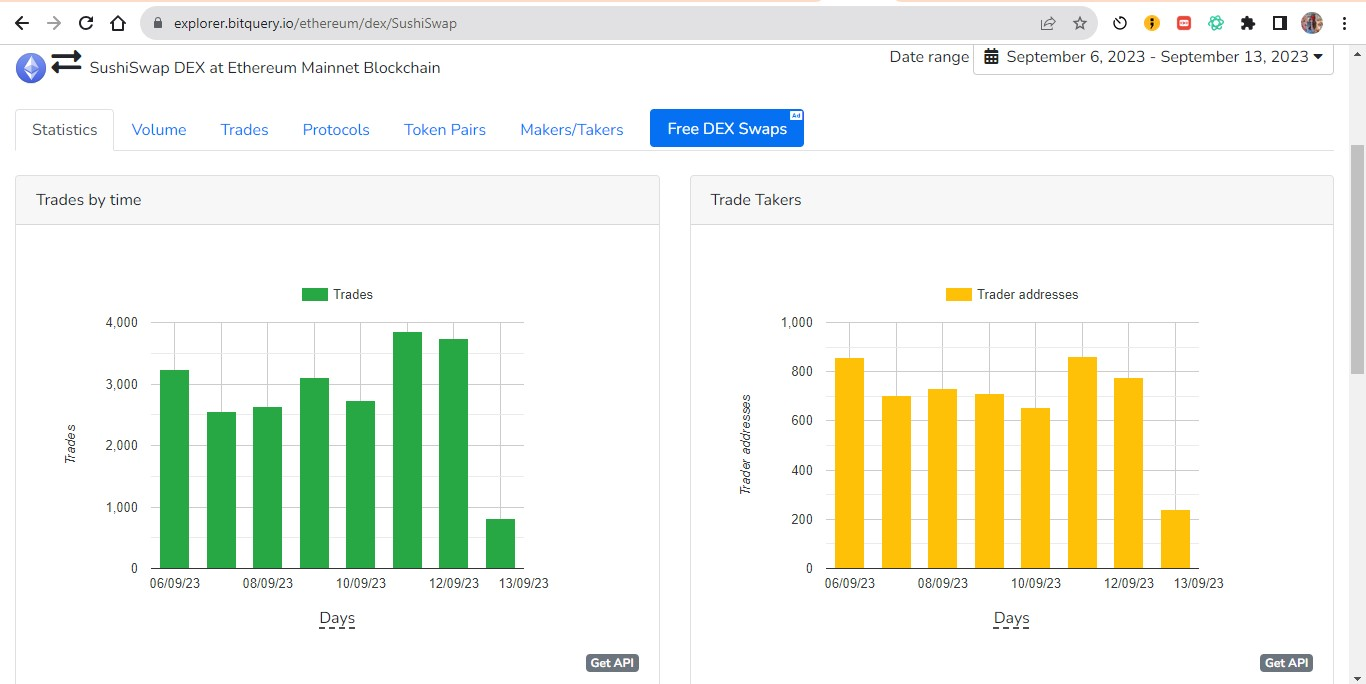
SushiSwap DEX Explorer: a visual interface for browsing SushiSwap trades, pairs and tokens without code, for anyone who would rather not call an API directly.
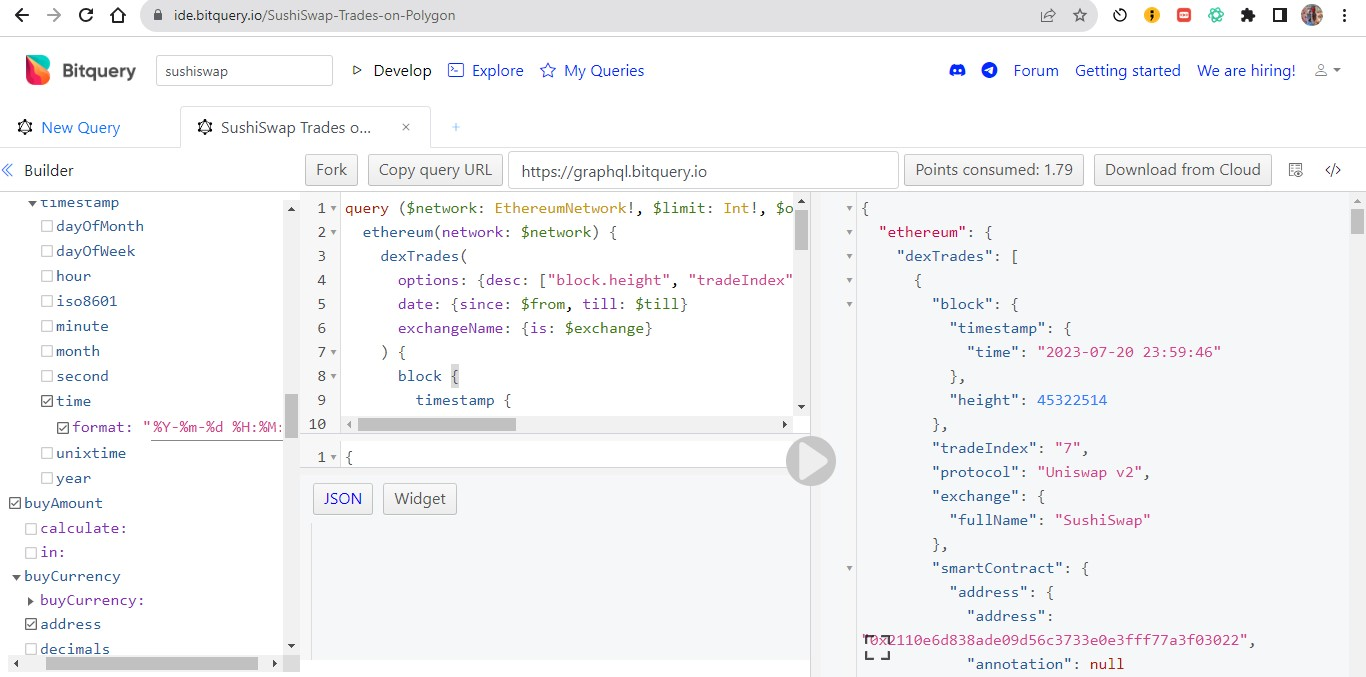
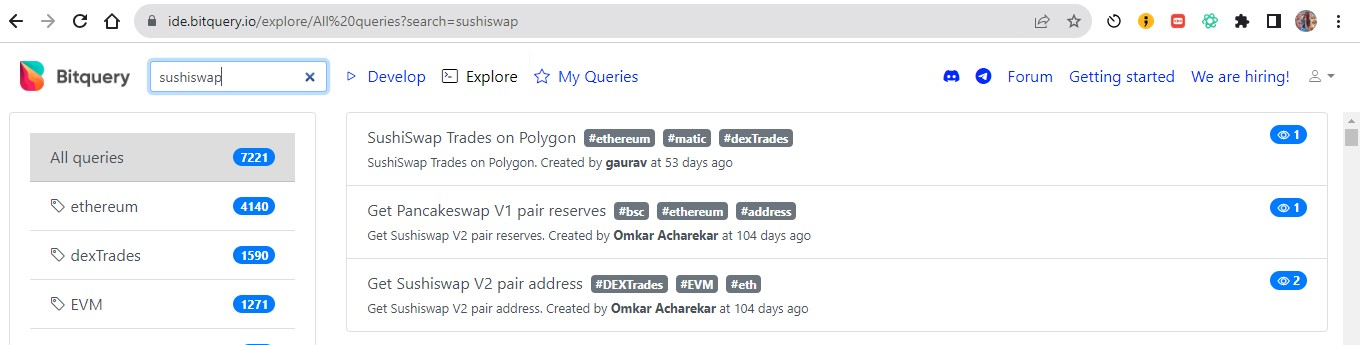
Bitquery's IDE and Query Runner: an IDE with a query builder, saved queries to start from, and a results view that visualises query output. The linked example returns SushiSwap trades on Polygon; change the network and factory for another chain.
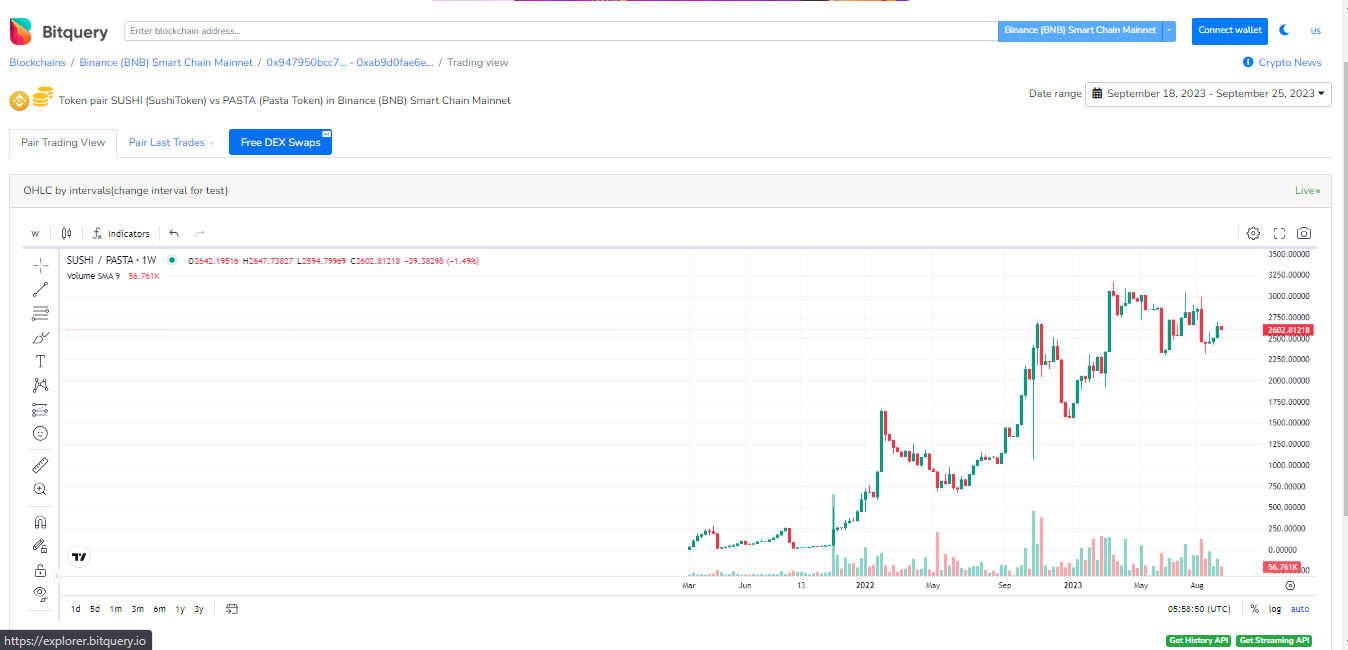
Extensive data, all of it in real time as soon as it lands on chain:
- The latest trades (live TradingView chart for any token)
- Historical trading patterns and volumes over time
- Token pairs, pool reserves and newly created pools
- OHLC candles per pool from the Crypto Price API
Build your own SushiSwap dashboard: pull the data into a TradingView chart or custom dashboard for a personalised view of the ecosystem.
Scalability vs Pricing: Bitquery prices by usage with self-serve monthly plans and a free trial, so a project can start small and scale to hundreds of streams; the pricing page has the current tiers and limits.
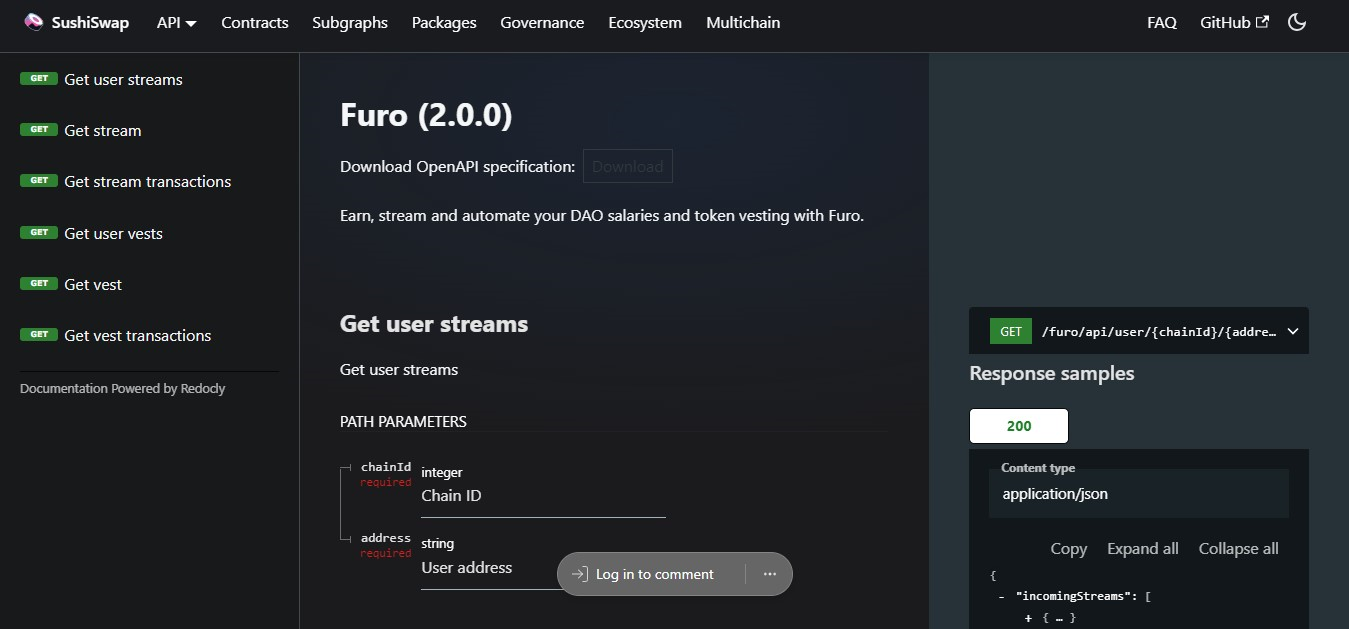
2. SushiSwap Official API
- Overview: SushiSwap's own interfaces are the reference for protocol state and routing. They provide token lists, pool data and route quotes for executing swaps, and are the trusted source for anything that must match what the protocol itself reports.
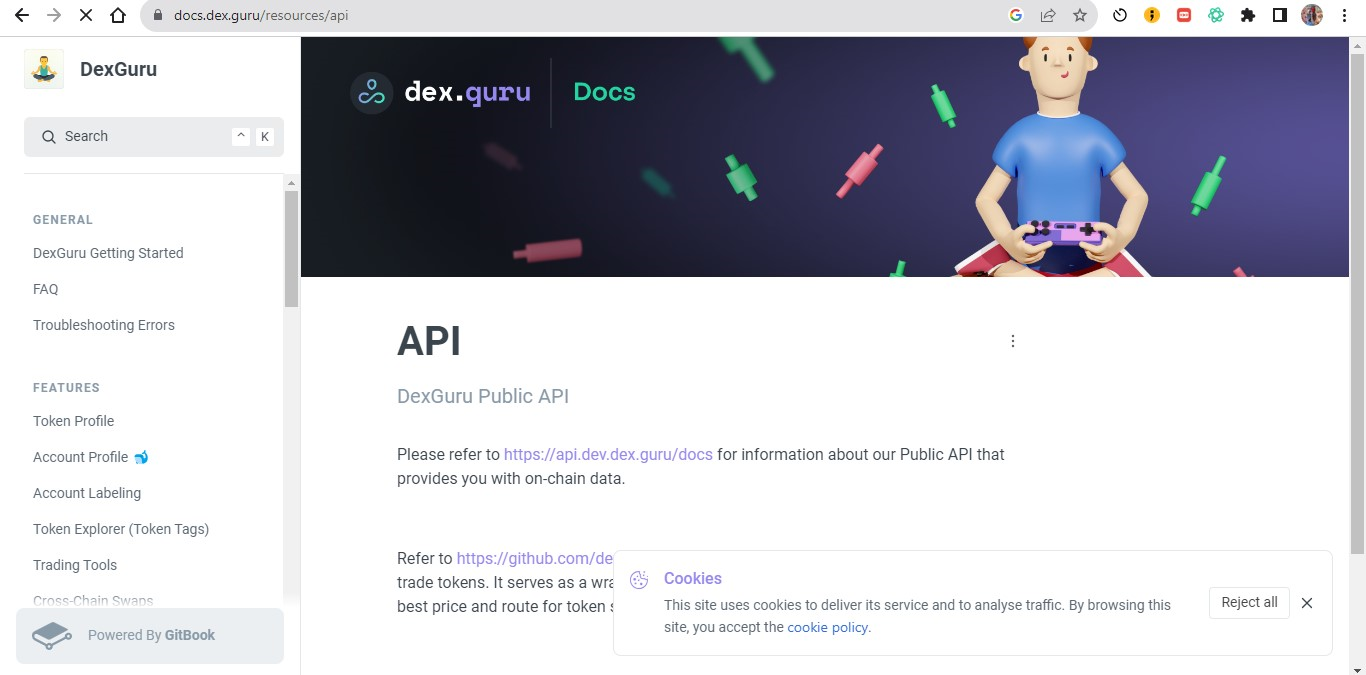
3. DexGuru
- Features: DexGuru is a real-time DEX screener with token prices, liquidity pool dynamics and trading activity across venues including SushiSwap. Its charts and visualisation tools make it easier to analyse market trends, spot opportunities and act on them.
4. CoinGecko
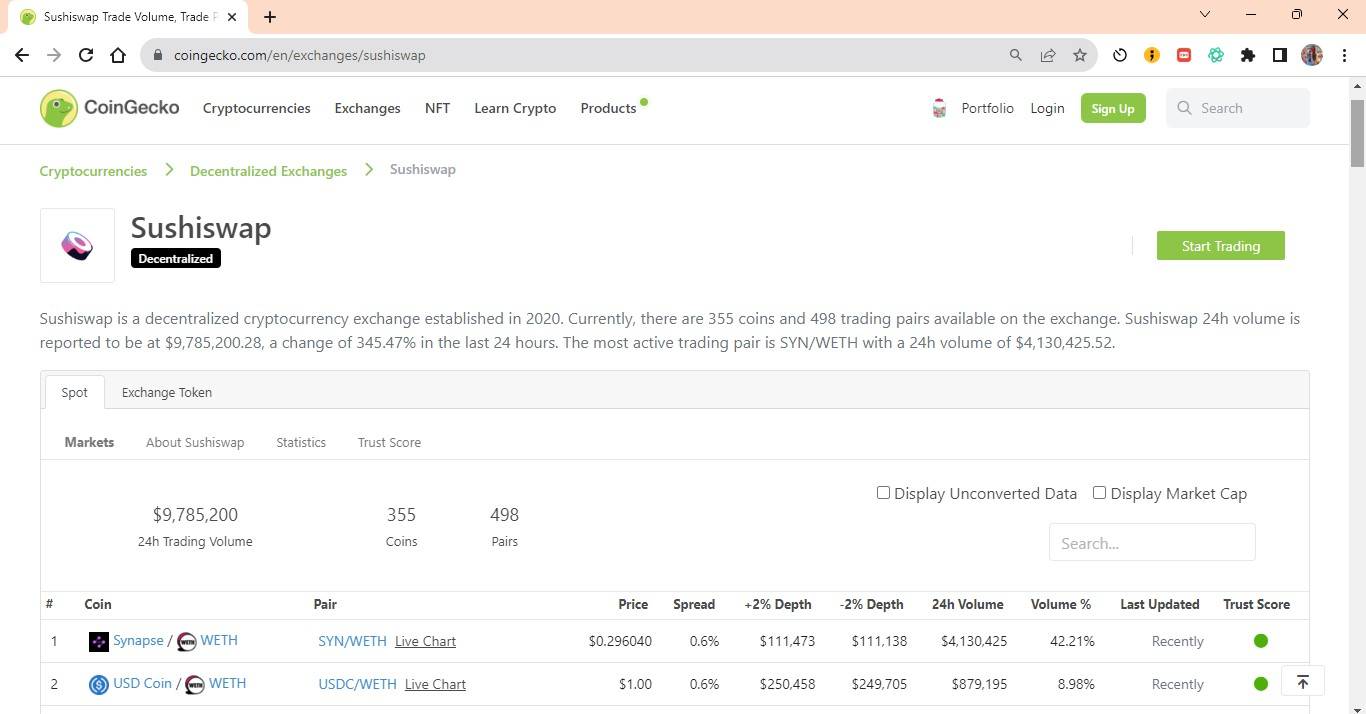
- Data: CoinGecko is a powerhouse of cryptocurrency data with comprehensive SushiSwap coverage: price data, trading volumes, historical price charts and market capitalisation, plus on-chain DEX endpoints for pools and tokens. It is a trusted, widely used source for aggregated market data.
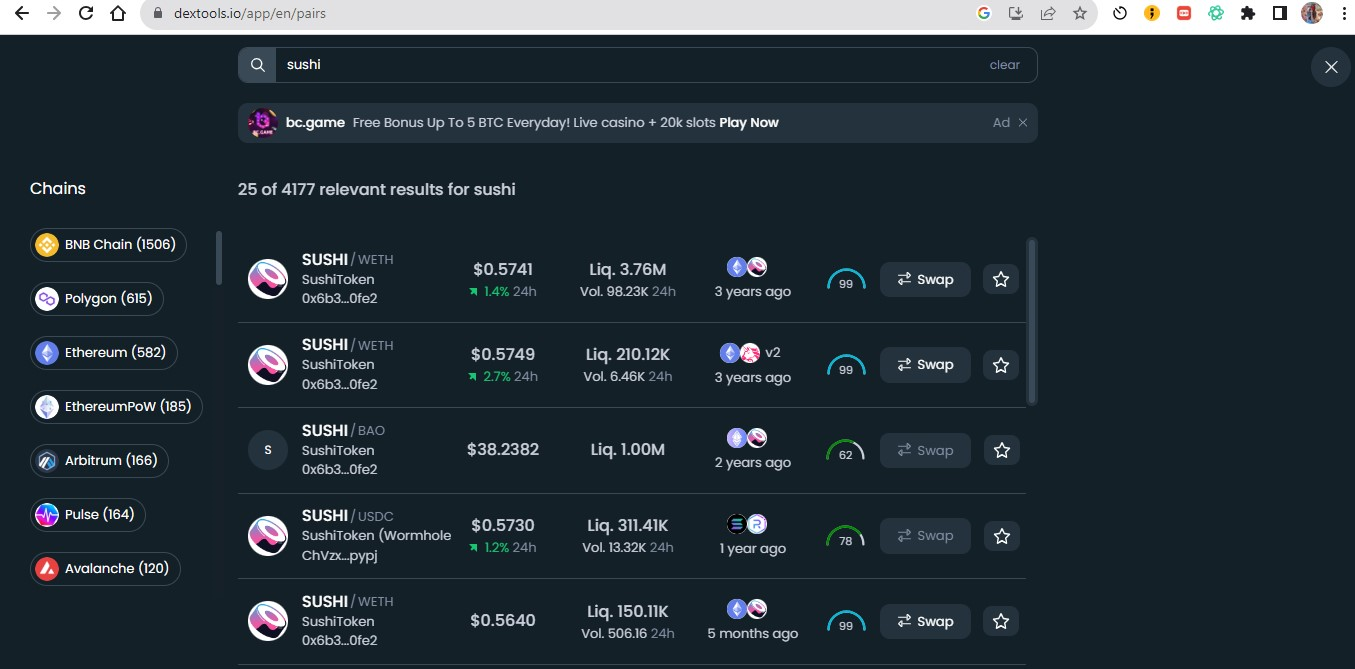
5. DexTools
- Functionality: DexTools is a DEX screener with token tracking, real-time price charts and historical trading data for SushiSwap pairs. Traders use it for market trends and liquidity while navigating the DEX landscape.
6. DeBank
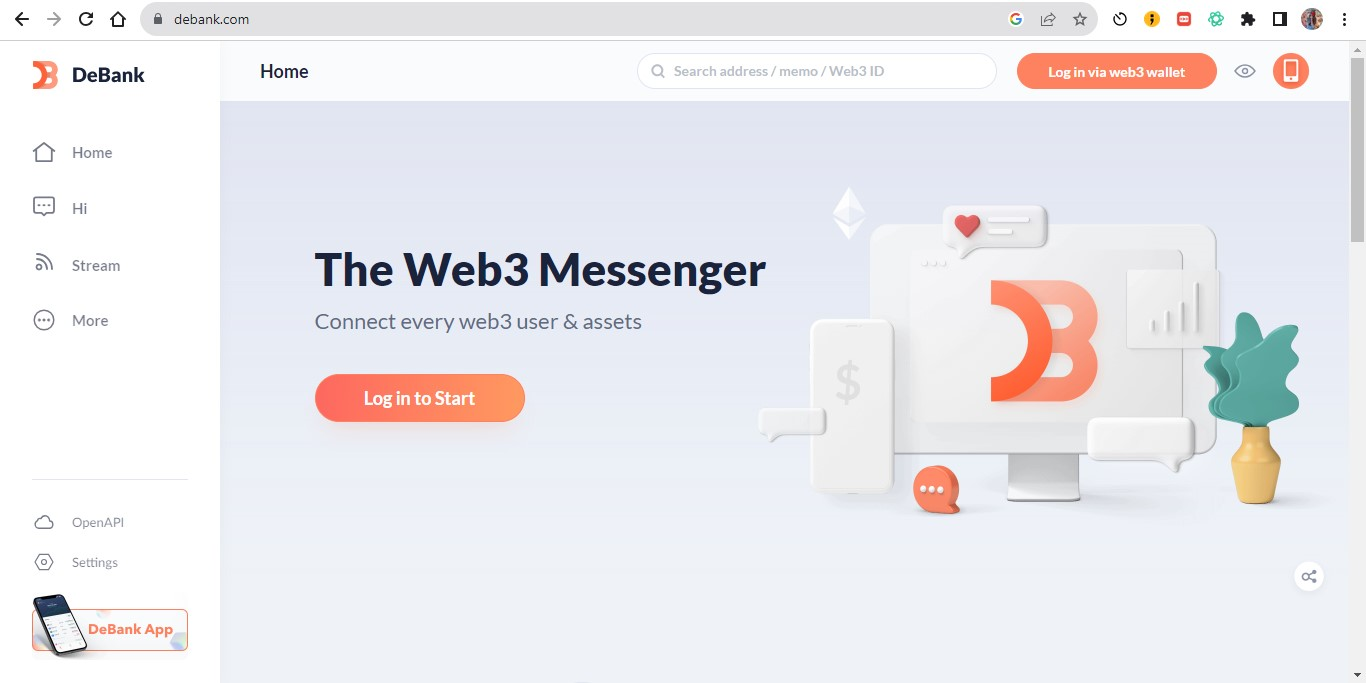
DeBank is a DeFi wallet and analytics platform that incorporates SushiSwap positions, so users can track holdings and liquidity pool positions across protocols in one place. It simplifies DeFi portfolio management for anyone active on several protocols.
7. Nansen
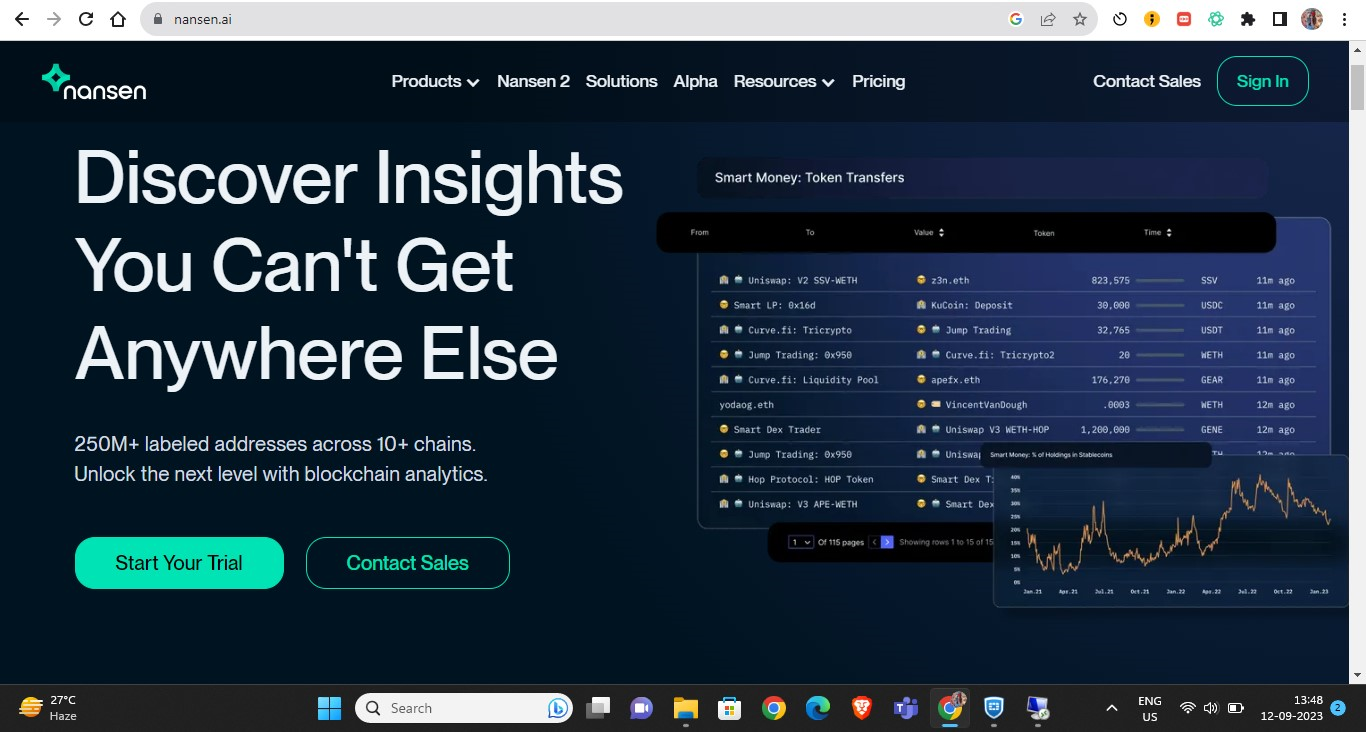
- Analytics: Nansen specialises in on-chain analytics for Ethereum-based DeFi, SushiSwap included, with labelled wallets, token flows and smart-contract interactions. Investors and analysts use it to understand user behaviour and market dynamics.
8. Zapper
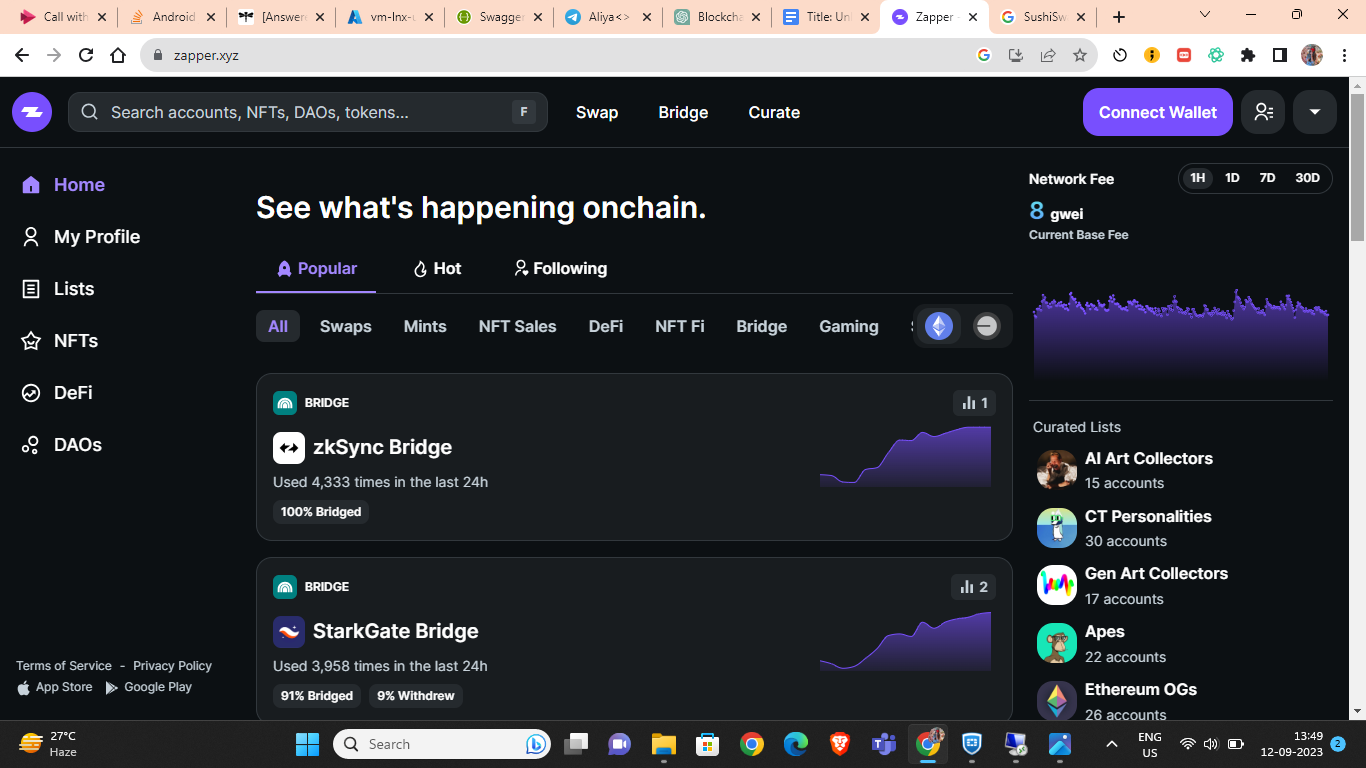
- Portfolio Management: Zapper provides a DeFi dashboard that simplifies asset management across many protocols, including SushiSwap, with a holistic view of a portfolio and its positions.
9. 1inch
- DEX Aggregator: 1inch aggregates liquidity across DEXs, SushiSwap among them, and routes each trade for the best price. It is the tool for execution rather than for historical data.
10. SushiSwap Vision
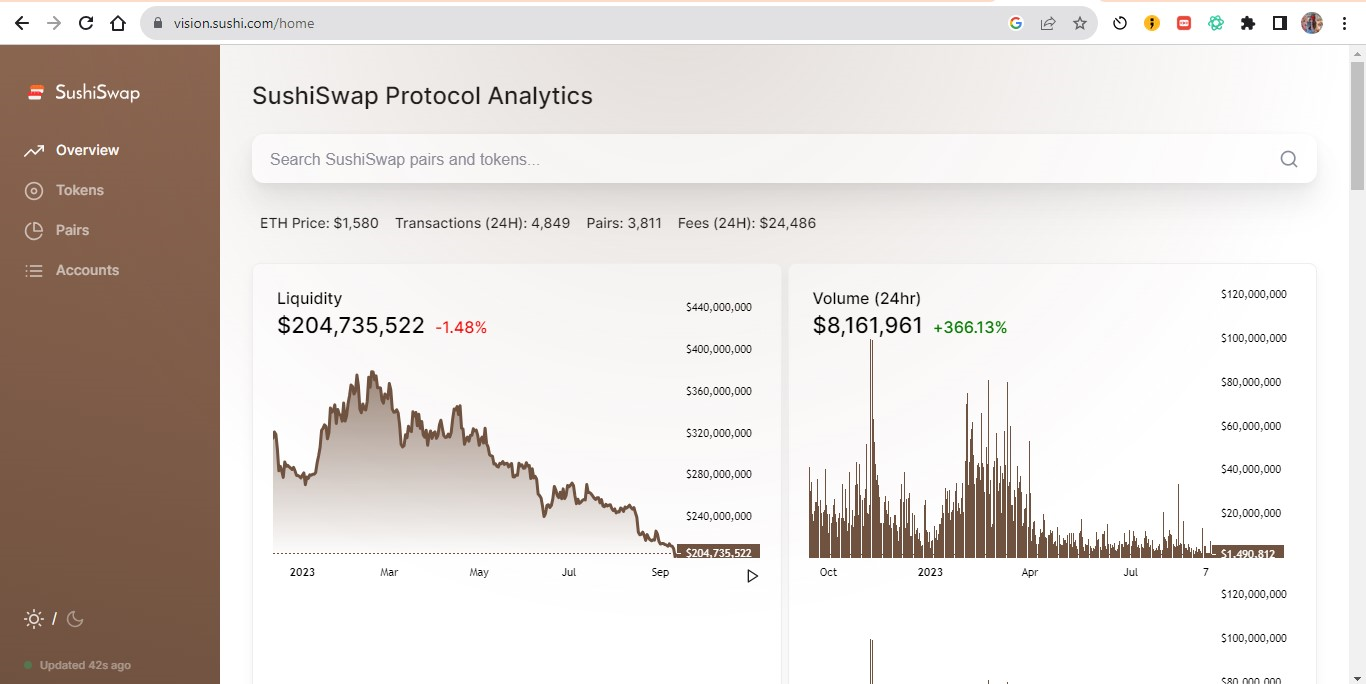
- Insights: SushiSwap's analytics dashboards present liquidity pools, token swaps and historical data in visual form, which helps with pool selection and price analysis inside the SushiSwap platform itself.
How to Choose the Best SushiSwap Data Provider
Selecting the most suitable SushiSwap data provider involves several factors:
-
Data Depth: Check that the provider covers the data points you need, from trade-level detail with USD prices to pool reserves, across the chains SushiSwap runs on. Check too how it identifies SushiSwap pools; providers that classify by pool interface need a factory filter.
-
User Interface: Assess how easy the tool or API is to use. Bitquery's IDE and explorer make it easy to navigate and extract data without a full integration.
-
Additional Features: Portfolio tracking, advanced analytics and DEX aggregation can each strengthen a workflow, depending on whether you trade, invest or build.
-
Reliability: Verify that data is current and complete. Bitquery streams updates in real time and keeps the full history, which prevents decisions made on stale data.
-
Cost: Compare pricing structures, especially for extensive analysis or streaming. Some sources offer free basic access, others charge for premium features.
-
Community and Support: Strong community engagement and responsive support matter when you hit issues or have questions.
Conclusion
Reliable SushiSwap data is your compass in the DEX landscape. Whether you choose Bitquery's coverage or tools such as DexGuru, CoinGecko or DexTools, the right source lets you navigate decentralized exchanges with confidence.
FAQ
- What is SushiSwap?
SushiSwap is a decentralized exchange built on Ethereum and other chains for token swaps, liquidity provision and yield farming.
- Why do SushiSwap trades show up as Uniswap in some APIs?
SushiSwap's pools implement the Uniswap v2 and v3 pool interfaces, so providers that classify by interface label them uniswap_v2 and uniswap_v3. The factory that deployed the pool identifies it as SushiSwap; filter on the factory address to isolate SushiSwap trades and pools.
- What is a DEX screener?
A DEX screener is a tool that provides real-time insights into decentralized exchanges, including SushiSwap, so traders can monitor token prices, liquidity pools and trading activity.
- Are there free SushiSwap data sources?
Yes. Several tools have free tiers, and Bitquery offers a free trial with live streaming so you can explore SushiSwap's data before subscribing.
- How can I begin analyzing SushiSwap data?
Start with the factory-filtered query above in the Bitquery IDE, then pick the tools on this list that match your workflow.
Related reading
- DEX data APIs: Uniswap trades, prices and OHLC in one query
- From Uniswap to SushiSwap: a deep dive into Ethereum's DEX ecosystem
- Uniswap API: 10 essential trading data APIs
Blog authored by guest writer Aliya
Subscribe to our newsletter
Subscribe and never miss any updates related to our APIs, new developments & latest news etc. Our newsletter is sent once a week on Monday.